

Barcelona can be enjoyed calmly and safely when you plan accessibility in advance for every step: transfers, accommodation, routes, and support needs. Whether you’re coming for accessible tourism or your trip is linked to a medical appointment or treatment, having the right support equipment makes a real difference. In this guide you’ll find practical tips for traveling with a wheelchair, deciding whether to rent or buy assistive equipment, and organizing a comfortable stay for people with reduced mobility, companions, and caregivers.
What assistive equipment is and why to plan it
Assistive equipment includes support products that improve independence, safety, and rest. It’s not only about “having a wheelchair”: sometimes the most helpful item is an accessory that reduces effort or prevents falls (for example, a transfer board, a shower chair, or grab bars).
Planning ahead helps you:
- Avoid unexpected issues (non-adapted rooms, inaccessible showers, routes with barriers).
- Improve your accessible tourism experience (less waiting time, more energy to enjoy).
- Travel with greater peace of mind if there is reduced mobility or medical needs.
Renting or buying in Barcelona: how to choose
Buying isn’t always the best option. For occasional trips, renting is often more practical: it reduces luggage, avoids damage in transit, and lets you adapt equipment to your plans (long walks, medical visits, the beach, etc.). Buying may make sense if you travel frequently, need a very specific model, or require personalised adjustments.
When renting usually makes sense
- Short or mid-length stays (a weekend, a week, 10–15 days).
- Temporary need for a shower chair, hoist, or walker.
- Organised group trips where equipment is managed centrally.
- When you want to avoid transporting bulky items.
When buying can make sense
- You need specific equipment (size, posture, support, or power).
- You travel often and prefer your usual set-up.
- You require personalised adaptations (a specific pressure-relief cushion, backrest, footrests).
Most useful assistive equipment for traveling with a wheelchair
Needs vary depending on the person and the reason for the trip. Still, these are among the most requested items for people planning to travel with a wheelchair to a city like Barcelona:
- Shower or toilet chair: essential if the bathroom doesn’t have a stable seat or you need support for hygiene.
- Portable grab bars (if compatible with the surface): add safety during transfers.
- Positioning/pressure-relief cushion: key for long days of sightseeing.
- Transfer board: helps with bed-to-chair or chair-to-toilet transfers.
- Transfer hoist (when support needs are higher): reduces effort for the person and the caregiver.
- Small ramps or wedges: helpful for minor steps (always prioritising safety).
If you’re travelling for medical treatment, also consider equipment that supports rest and daily routines (an adjustable bed if needed, risers/lifts, or enough turning space).
Accessibility checklist before booking accommodation
True accessibility isn’t defined by an “adapted” label alone. Before booking, it’s worth confirming practical details. If you’re looking for an apartment for reduced mobility in Barcelona, check:
Access and circulation
- Are there steps at the entrance or by the lift?
- Does the front door allow wheelchair access (clear width)?
- Are corridors and turning areas comfortable for manoeuvring?
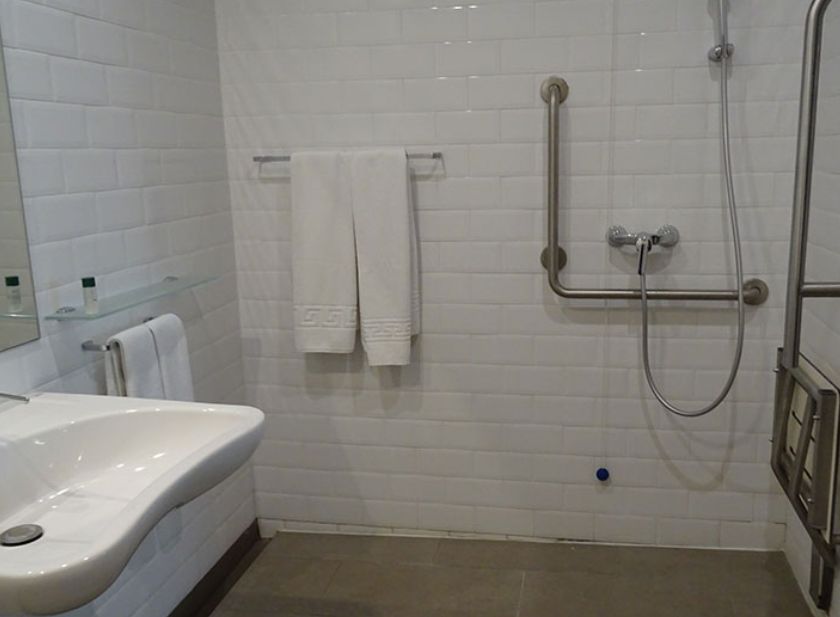
Adapted bathroom
- Level-access shower (walk-in) with no step.
- Space for safe transfers and support.
- Shower seat or the option to place a shower chair.
Bedroom and living area
- Bed height and side clearance for transfers.
- Accessible sockets, comfortable lighting, non-slip flooring.
At MICs Sant Jordi, the focus is on accommodation designed for people with reduced mobility who come to Barcelona for tourism or medical reasons, so the stay is practical and comfortable from day one.
Getting around Barcelona with accessible tourism
To enjoy accessible tourism, try planning “layers” of mobility: a main route and an alternative (in case of roadworks, crowds, or tiring slopes). Some general recommendations:
Transport and getting around
- Prioritise options with step-free access and wheelchair space.
- Avoid peak hours if you prefer more comfortable journeys.
- Allow extra time: the accessible route is sometimes different from the shortest one.
Routes with fewer barriers
Barcelona has areas with wide streets and others with slopes or narrow pavements. If your plan includes the old town, it helps to choose gentler access points, take more frequent breaks, and alternate indoor visits with rest stops.
Tickets, queues, and reservations
For museums, viewpoints, or attractions, check for alternative entrances, lifts, and priority access. Booking ahead reduces waiting and improves the experience for the wheelchair user and companions.
Practical tips for traveling with a wheelchair—without surprises
Small details can prevent big issues during your trip:
- Measure what matters: wheelchair width, turning radius, and transfer needs. Compare them with doors, lifts, and the bathroom.
- Manage energy: alternate longer outings with rest. Barcelona is best enjoyed without rushing.
- Bring a “quick kit”: gloves, poncho/raincoat, charger (if powered), basic tools, health documents, and a medication list.
- Confirm delivery/pick-up if you rent equipment: times, location, deposit, and usage instructions.
- Put safety first: on slopes or wet surfaces, slow down, use assistance if needed, and avoid improvised ramps.
Trips for medical reasons: comfort and routine
If your visit to Barcelona includes hospital appointments, rehabilitation, or consultations, accessibility becomes even more important: you need good rest, stable routines, and minimal logistical stress. In these cases, it often helps to have:
- Accommodation close to the care centre or with simple, straightforward routes.
- Spacious areas for manoeuvring, especially in the bathroom and bedroom.
- Assistive equipment focused on transfers and rest (more than sightseeing).
The goal is for accommodation to be a support—not a worry—so the person with reduced mobility can focus on recovery or treatment.
Book direct: your accessible stay in Barcelona
If you’re planning an accessible tourism trip and want accommodation prepared for reduced mobility, it’s best to book in advance and explain your needs (wheelchair type, whether you’re travelling with a companion, bathroom priorities, etc.). The clearer the information, the easier it is to recommend the right apartment.
Ready to take the next step?
Contact MICs Sant Jordi and request availability for an apartment with accessibility in Barcelona. Share your dates, number of guests, and key needs so the team can advise you and help you book the most comfortable option for you.